 Add Us On Google

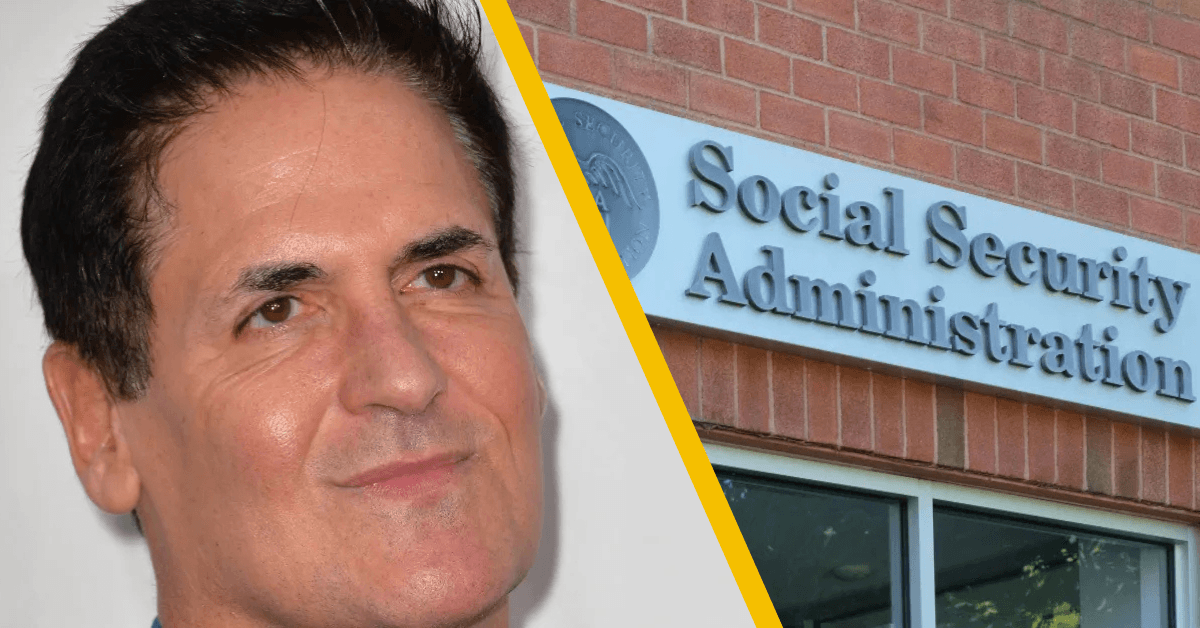
Social Security's funding has become a hot topic again, and two very different voices have entered the conversation. Billionaire entrepreneur Mark Cuban recently floated a list of fiscal ideas on social media, including a change to how Social Security taxes apply to high earners. Sen. Bernie Sanders, I-Vt., has a formal piece of legislation covering similar ground, co-sponsored with several colleagues in Congress.
Both ideas involve taxing income above the current Social Security wage base more heavily. But the similarities mostly end there. The income ranges, the treatment of investment income, and what high earners would get in return differ in ways that matter if you're trying to understand what either proposal could actually mean for the program's finances or for your own paycheck.
Here's how the two stack up and how they might impact your financial fitness.
Now Available: The Definitive Guide to Retirement Income
Many successful investors eventually reach the same moment. The saving is done, the portfolio is built, and the question quietly changes from how much can I grow this to how much can I take out? Get that second question wrong and decades of good investing can come apart in a handful of years.
That is exactly what The Definitive Guide to Retirement Income helps answer.1 <p class="">Investing in securities involves a risk of loss. Past performance is never a guarantee of future returns. Investing in foreign stock markets involves additional risks, such as the risk of currency fluctuations. Guides are provided by Fisher Investments. The publisher may be compensated when readers request a guide.</p> It covers what your retirement could actually cost, which income sources are worth using, and the withdrawal math that decides whether the money lasts. It is free today from Fisher Investments. Read More Here ›
What Cuban actually proposed
Following the 2026 midterm elections, Cuban posted a series of ideas on X about reducing the federal deficit and raising revenue from wealthier Americans, according to reporting from Yahoo Finance's First for Money. Among them, Cuban suggested applying Social Security taxes to earnings between $1 million and $5 million.
In the same posts, Cuban also suggested raising the top tax bracket on earned income to 44%; the current top bracket, which starts at $640,601 for single filers and $768,701 for joint filers in 2026, is taxed at 37%, according to the IRS.
It's important to be precise about what this is: a series of social media posts outlining a general concept, not a bill, a white paper, or a detailed policy proposal.
Cuban didn't specify a tax rate for this earnings band, didn't say whether it would apply to employees, employers, or both, and didn't address whether earnings above the $5 million mark would go untaxed, taxed at a different rate, or treated some other way. He also didn't say whether this additional taxation would translate into higher Social Security benefits for those who pay it.
Since the proposal doesn't include those details, any comparison has to treat Cuban's idea as a broad concept rather than a fully worked-out plan.
What's actually in the Social Security Expansion Act
Sanders' proposal is a different animal. The Social Security Expansion Act, introduced Feb. 27, 2025, by Sanders along with Sen. Elizabeth Warren, D-Mass., and Reps. Jan Schakowsky, D-Ill., and Val Hoyle, D-Ore., is actual legislation with bill text, according to a press release from Sanders' Senate office. It has not been enacted into law.
The bill would apply the Social Security payroll tax to all earned income above $250,000, a threshold that, according to the Social Security Administration's actuarial analysis of a similar prior version of the bill, would remain a fixed dollar amount rather than rise with wages each year, unlike the current taxable maximum.
SSA's analysis projects that all earnings would become taxed only once the current-law taxable maximum itself exceeds $250,000, which it estimated would occur around 2035.
In the meantime, earnings between the current taxable maximum (which is $184,500 for 2026, according to the SSA) and $250,000 would continue to go untaxed for Social Security purposes, while earnings below the current taxable maximum and above $250,000 would both be taxed, creating what's sometimes called a "donut hole" in the middle.
The legislation also goes further than payroll taxes on wages. According to the SSA's actuarial memo on a 2023 version of the bill championed by Sanders, it would apply a separate 12.4% tax on certain investment income for higher earners, something the current Social Security payroll tax system doesn't touch at all.
The same SSA analysis notes that earnings taxed above the $250,000 threshold would generally not count toward a worker's future benefit calculation, meaning higher earners would pay more without necessarily receiving a larger monthly check in retirement.
Sanders' office says the legislation would increase Social Security benefits by $2,400 a year for beneficiaries, improve the Special Minimum Benefit for long-term low-wage workers, restore student benefits up to age 22 for children of disabled or deceased workers, and boost the annual cost-of-living adjustment (COLA) calculation method, according to the press release.
The same release cites an average Social Security benefit of $1,838 a month; that figure comes from Sanders' office rather than current SSA data, and it is lower than SSA's own estimated average retired-worker benefit of $2,071 a month for 2026.
How the income thresholds compare
This is where the two ideas diverge most clearly.
Cuban's concept
A new tax band specifically on earnings between $1 million and $5 million. Earnings below $1 million would presumably remain subject to Social Security tax only up to the existing taxable maximum of $184,500 for 2026, though Cuban didn't spell this out.
Sanders' bill
Taxes earned income above $250,000, with no stated upper limit. There's no $5 million ceiling in the legislation; once you clear $250,000, the payroll tax keeps applying. The bill also separately taxes certain investment income at 12.4%, which Cuban's posts didn't mention at all.
In short, Sanders' plan would start taxing additional income at a much lower threshold ($250,000) than Cuban's hypothetical range ($1 million). But Cuban's idea, as stated, would leave income between roughly $184,500 and $1 million untouched beyond current law, while Sanders' bill would start taxing right at $250,000.
Released: The Definitive Guide to Retirement Income
Most people spend their entire working lives focusing on one thing: growing a pile of money. Then they retire and discover the skill they actually need is close to the opposite. Turning that pile into steady income, year after year, through good markets and bad, without ever running out. It may be the least discussed and most consequential transition in personal finance, and plenty of otherwise careful investors walk into it with no real plan.
That is exactly what The Definitive Guide to Retirement Income helps answer.1 <p class="">Investing in securities involves a risk of loss. Past performance is never a guarantee of future returns. Investing in foreign stock markets involves additional risks, such as the risk of currency fluctuations. Guides are provided by Fisher Investments. The publisher may be compensated when readers request a guide.</p> It is a free guide from Fisher Investments covering what your retirement will really cost, where the cash flow should come from, and how much you can safely withdraw each year. Learn More Here ›
A hypothetical comparison
Consider a hypothetical worker earning $2 million a year in wages, with no additional investment income, to make the two concepts comparable on earned income alone.
Under current law, that person pays the standard 6.2% Social Security payroll tax (matched by a 6.2% employer contribution, for a combined 12.4%, per the SSA) only on the first $184,500 of 2026 wages, or $11,439 from the employee and the same from the employer.
Under the Social Security Expansion Act, that same $2 million earner would continue paying 6.2% up to $184,500, pay nothing on wages between $184,500 and $250,000 (the donut hole), and then resume paying 6.2% on every dollar from $250,000 up to $2 million, with a matching employer share. That's a substantial new tax bill on $1.75 million of additional wages.
Under Cuban's stated concept, assuming the same 6.2%/6.2% split he hasn't actually specified, that worker would pay nothing in Social Security tax between the taxable maximum and $1 million, and then owe a new, unspecified tax on the next $1 million up to the $5 million ceiling he mentioned, since the full $2 million falls inside his $1 million to $5 million range.
Since Cuban hasn't said whether the rate would match today's 6.2%, be split between employer and employee, or work some other way, any dollar estimate for his idea is necessarily speculative.
Retirement News: Almost 80% of Americans fear a retirement age increase — here’s the real reason why
Neither idea is current law
It's worth repeating plainly: neither proposal has been enacted. Cuban's idea is a personal policy suggestion posted on social media, not legislation introduced in Congress. Sanders' Social Security Expansion Act is real legislation with co-sponsors, but it has not passed Congress or been signed into law.
Workers and retirees aren't affected by either idea today, and any future impact would depend on whether, and in what form, something like these proposals ever becomes law.
Why the taxable maximum matters either way
Both proposals exist because of how Social Security is currently funded. Under existing law, the 6.2% employee and 6.2% employer payroll taxes apply only up to the taxable maximum, which rises most years with average wages.
That maximum is $184,500 for 2026, and it's already scheduled to rise again to $192,300 in 2027. Earnings above that ceiling currently go untaxed for Social Security purposes, and because of that cap, the SSA notes that about 6% of covered workers in 2025 had earnings above the maximum.
This structure is central to both Cuban's and Sanders' thinking: both are responding to the fact that very high earners currently stop paying into Social Security well before the end of the calendar year, while most workers pay on every dollar they earn.
Bottom line
Mark Cuban's idea and Bernie Sanders' legislation both aim at the same general target, higher earners paying more into Social Security, but they're built very differently. Cuban's is a loosely sketched concept covering a specific income band with no stated rate or benefit implications.
Sanders' is detailed legislation with a lower starting threshold, no upper ceiling, a separate tax on investment income, and specific proposed benefit increases, though it remains unpassed. For anyone trying to plan around Social Security's future, the most useful step is tracking actual legislative developments rather than individual proposals or social media posts.
The SSA's online My Social Security account lets you check your current earnings record and estimated future benefits under today's rules, which remain the only rules in effect regardless of what lawmakers or public figures propose next. It's also a good time to review your retirement plan.
More from FinanceBuzz:
- Retire like the rich: 14 ways you could build wealth in your 50s.
- Find out if you could pay less for car insurance in just a few clicks.
- Make these 7 savvy moves when you have $1,000 in the bank.
- 14 moves seniors could benefit from but often forget about.








- Huge discounts on travel, groceries, prescriptions and more
- Access to financial planning resources and health tools
- For a limited time, get 55% off 5-year plans