Add Us On Google

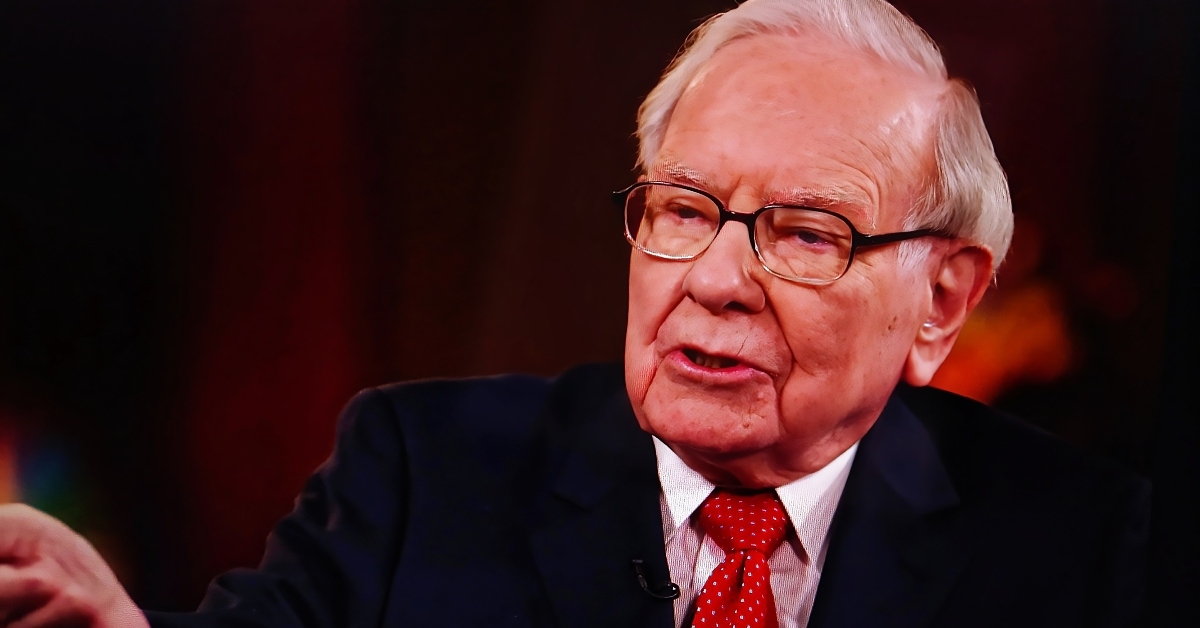
If you're working on improving your financial fitness and want to invest with more discipline and clarity, it's worth turning to the investment wisdom of billionaire business magnate Warren Buffett. As the Chairman of Berkshire Hathaway, over the decades, he's figured out which principles work and how they can be applied to individual investors. The challenge isn't finding the next hot stock, but building a sound framework for financial decision-making.
Here are eight of Buffett's best tips to guide your investment strategy and bring you closer to profitable outcomes.
Now Available: The Definitive Guide to Retirement Income
Many successful investors eventually reach the same moment. The saving is done, the portfolio is built, and the question quietly changes from how much can I grow this to how much can I take out? Get that second question wrong and decades of good investing can come apart in a handful of years.
That is exactly what The Definitive Guide to Retirement Income helps answer.1 <p class="">Investing in securities involves a risk of loss. Past performance is never a guarantee of future returns. Investing in foreign stock markets involves additional risks, such as the risk of currency fluctuations. Guides are provided by Fisher Investments. The publisher may be compensated when readers request a guide.</p> It covers what your retirement could actually cost, which income sources are worth using, and the withdrawal math that decides whether the money lasts. It is free today from Fisher Investments. Read More Here ›
Play the long game
Buffett famously told Berkshire Hathaway shareholders, "If you aren't willing to own a stock for 10 years, don't even think about owning it for 10 minutes."
His focus on the long haul means you're less likely to be thrown off course by short-term market swings or volatility. By adopting a long-term mindset, you give compounding, strategy, and patience time to work in your favor.
Only invest in businesses that you understand
Buffett's philosophy is simple: don't buy what you don't get. He believes investors should stick to their "circle of competence" — only investing in industries and companies they truly understand.
When you can clearly explain how a business makes money and why it has staying power, you're more likely to make confident, informed decisions. That means steering clear of trendy or overly complex stocks that may sound exciting but may not make sense on paper.
Focus on high-quality businesses, not cheap stocks
Buffett distinguishes between inexpensive stocks and quality businesses bought at reasonable prices. He emphasizes that looking for value means finding good companies whose long-term prospects are strong, not just companies whose share prices are low.
Prioritizing business strength, management quality, and durable competitive advantage helps ensure the company can thrive through economic cycles. Investing in quality businesses for the long-term can lead to better odds of success than chasing cheap stocks in the short-term.
Released: The Definitive Guide to Retirement Income (Sponsor)
Most people spend their entire working lives focusing on one thing: growing a pile of money. Then they retire and discover the skill they actually need is close to the opposite. Turning that pile into steady income, year after year, through good markets and bad, without ever running out. It may be the least discussed and most consequential transition in personal finance, and plenty of otherwise careful investors walk into it with no real plan.
That is exactly what The Definitive Guide to Retirement Income helps answer.1 <p class="">Investing in securities involves a risk of loss. Past performance is never a guarantee of future returns. Investing in foreign stock markets involves additional risks, such as the risk of currency fluctuations. Guides are provided by Fisher Investments. The publisher may be compensated when readers request a guide.</p> It is a free guide from Fisher Investments covering what your retirement will really cost, where the cash flow should come from, and how much you can safely withdraw each year. Learn More Here ›
Invest in businesses where you likely won't lose money
This is one of Buffett's most famous pieces of advice: "Rule No. 1: Never lose money. Rule No. 2: Never forget rule No. 1."
While no investment is risk-free, his emphasis is on preserving capital and reducing downside, because recovering from a financial loss can be more difficult than building returns from scratch. By focusing on companies with durable competitive advantages, strong cash flows, and reasonable valuations, you can tilt the odds of investing success in your favor.
Don't necessarily follow the pack
Buffett rejects herd behavior and instead opts for independent thinking. He cautions against trying to time markets or jumping into the latest fads simply because others are doing so.
A disciplined investor questions prevailing market sentiment, asks "why" before buying, and avoids the emotional pull of fear or greed. Being comfortable standing apart (when you've done your homework) can be a powerful edge.
Consider low-cost index funds
Buffett has long advised that most investors would do better by owning a low-cost S&P 500 index fund rather than trying to pick individual stocks. Index funds give you broad exposure to hundreds of companies, reduce risk through diversification, and carry minimal management fees.
They're also a great option for those who prefer a hands-off approach and want to capture the market's long-term growth. Buffett himself has said that when he passes, he wants 90% of his estate invested in a simple, low-cost S&P 500 index fund for a reason — because it works.
Be financially disciplined
Buffett emphasizes that your personal finances matter just as much as your investment choices. Staying out of excessive, high-interest debt means you'll earn interest instead of giving it away. He treats financial discipline as a core principle for financial growth.
Investors who manage their costs, keep fees low, and avoid lifestyle inflation often give themselves a stronger platform for long-term success.
Prioritize risk
Risk isn't about volatility alone. Buffett encourages investors to consider what they might lose, not just what they might gain. Doing your homework on a company before investing is crucial.
By prioritizing capital preservation and understanding investment risks, you'll be able to make more strategic decisions and avoid financial surprises. Considering a company's business model, earnings history, and its long-term market performance is more important than just chasing upside.
Bottom line
Buffett's investment framework boils down to a few simple but profound ideas: think long-term, focus on what you know, buy quality businesses, protect your capital, think independently, invest in index funds, stay financially disciplined, and manage risk intentionally.
His habits may seem basic, yet they've stood the test of decades of markets and cycles. If you want to build a strong investment foundation for yourself, think about which Buffett principles you'll adopt first so you can start investing today.
More from FinanceBuzz:
- Retire like the rich: 14 ways you could build wealth in your 50s.
- Find out if you could pay less for car insurance in just a few clicks.
- Make these 7 savvy moves when you have $1,000 in the bank.
- 14 moves seniors could benefit from but often forget about.








- American Hartford Gold helps individuals protect their retirement by rolling over IRAs and 401(k)s into physical gold.
- Includes FREE IRA rollover and storage for up to 3 years.
- Get up to $20,000 in free silver on qualifying purchases.