 Add Us On Google

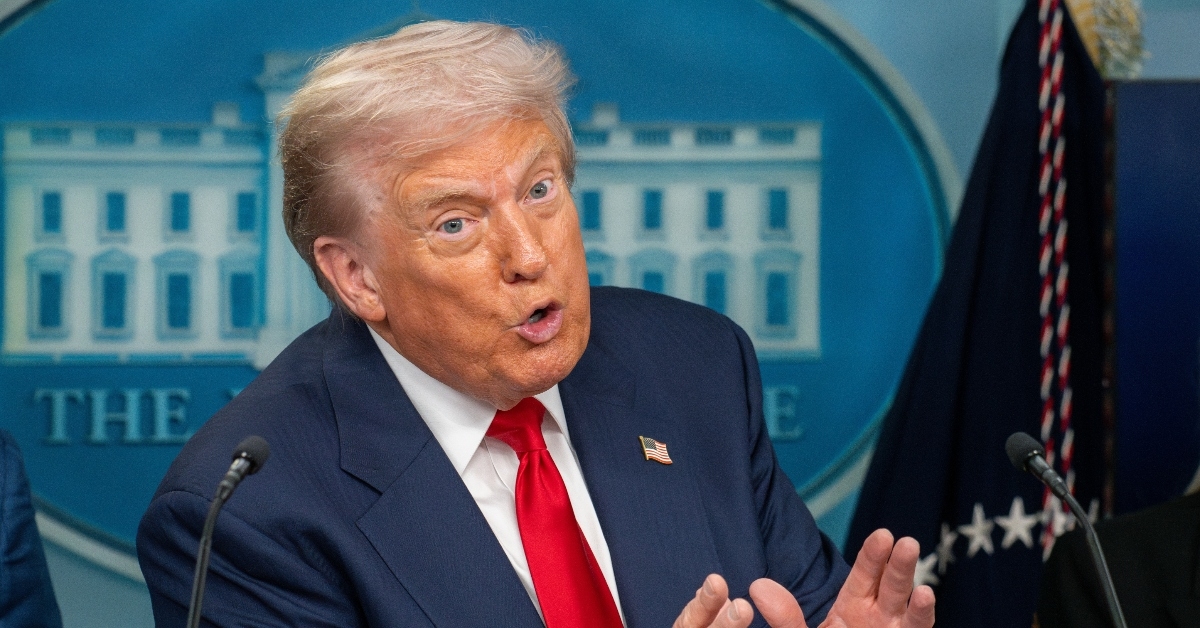
President Trump has pointed to Australia as a retirement model the United States should study, bringing a very different system into the Social Security conversation.
Unlike the United States, Australia requires employers to contribute to private retirement accounts for eligible workers, while its public pension is mainly reserved for retirees with the greatest financial need.
Social Security already supports millions of Americans, so adopting a system like Australia's would raise immediate questions about how current senior benefits would fit alongside it. Here's what to know.
Now Available: The Definitive Guide to Retirement Income
Many successful investors eventually reach the same moment. The saving is done, the portfolio is built, and the question quietly changes from how much can I grow this to how much can I take out? Get that second question wrong and decades of good investing can come apart in a handful of years.
That is exactly what The Definitive Guide to Retirement Income helps answer.1 <p class="">Investing in securities involves a risk of loss. Past performance is never a guarantee of future returns. Investing in foreign stock markets involves additional risks, such as the risk of currency fluctuations. Guides are provided by Fisher Investments. The publisher may be compensated when readers request a guide.</p> It covers what your retirement could actually cost, which income sources are worth using, and the withdrawal math that decides whether the money lasts. It is free today from Fisher Investments. Read More Here ›
Trump's comments put Australia's system in the spotlight
President Trump first brought up Australia's retirement system while discussing Trump Accounts, a plan that would give American children government-funded investment accounts at birth. The program officially launched in July 2026, allowing families to open and fund accounts for their children. Eligible children born between Jan. 1, 2025, and Dec. 31, 2028, can also qualify for a one-time $1,000 federal government contribution.
He pointed to Australia as a country where a similar philosophy has been put into practice nationwide, and said the system has "really worked out very well."
Trump has since connected the Australian model more directly to retirement policy, suggesting the United States should take a closer look. In July 2026, Sen. Ted Cruz (R-Texas) publicly endorsed Trump's comments and announced that he was authoring legislation intended to expand Americans' access to private retirement savings.
How Australia's system works
Australia spreads retirement income across three different sources instead of relying mainly on one government program.
- Age Pension: A government pension funded through general tax revenue. The amount depends on your income and assets, so retirees with more savings receive a smaller payment or none at all.
- Superannuation: Employers must contribute 12% of a worker's earnings into a private retirement account that belongs to the employee. The money is invested over time and can usually be accessed from around age 60.
- Personal savings: Many Australians also add their own retirement savings on top of employer contributions, with tax incentives to encourage them to save more.
Together, those three sources provide retirement income for most Australians. Private retirement accounts do much of the heavy lifting, while the government pension acts as a safety net for people whose savings are not enough.
Bringing Australia's system to the U.S. would be much harder
Australia introduced its retirement system in the early 1990s, with employers making mandatory contributions into new private retirement accounts. Those contributions were new money, so they did not replace an existing program like Social Security.
The U.S. already has a Social Security system funded by a 12.4% payroll tax that pays benefits to current retirees. Any move toward private retirement accounts would have to fit around that existing system.
Released: The Definitive Guide to Retirement Income
Most people spend their entire working lives focusing on one thing: growing a pile of money. Then they retire and discover the skill they actually need is close to the opposite. Turning that pile into steady income, year after year, through good markets and bad, without ever running out. It may be the least discussed and most consequential transition in personal finance, and plenty of otherwise careful investors walk into it with no real plan.
That is exactly what The Definitive Guide to Retirement Income helps answer.1 <p class="">Investing in securities involves a risk of loss. Past performance is never a guarantee of future returns. Investing in foreign stock markets involves additional risks, such as the risk of currency fluctuations. Guides are provided by Fisher Investments. The publisher may be compensated when readers request a guide.</p> It is a free guide from Fisher Investments covering what your retirement will really cost, where the cash flow should come from, and how much you can safely withdraw each year. Learn More Here ›
A new federal retirement savings incentive starts in 2027
The federal government is also preparing a separate change designed to encourage more Americans to save for retirement. Starting in 2027, the Saver's Match will provide eligible low- and moderate-income workers with a federal matching contribution of up to 50% of their retirement plan or IRA contributions.
The maximum match is $1,000 per person annually, deposited directly into a qualifying retirement account. Married couples filing jointly can each qualify for a match. Eligibility and the matching percentage depend on income and filing status.
Unlike the Australian superannuation system, the Saver's Match does not require employers to contribute a percentage of workers' salaries. Instead, it rewards individuals who save their own money. Eligible taxpayers will claim the match when filing their 2027 federal income tax returns in 2028.
The program replaces the existing Saver's Credit for qualifying retirement plan and IRA contributions beginning in 2027. It represents another federal effort to encourage private retirement savings, but it does not change Social Security's payroll tax structure or benefit calculations.
Two ways the U.S. could adopt a system like this
One option, called a carve-out, would send part of the money that now goes to Social Security into private retirement accounts. In return, workers would receive a smaller Social Security benefit because part of their payroll taxes had gone into those accounts instead.
The other option, called an add-on, would leave Social Security's funding and benefits unchanged. New retirement accounts would be funded with extra contributions or another source of money.
What each approach could cost
The 2026 Social Security Trustees Report projects about $11 trillion in taxable payroll in 2026.
Based on that estimate, redirecting 1 percentage point of payroll taxes into private retirement accounts would move roughly $110 billion away from Social Security. Redirecting 2 percentage points would increase that to about $221 billion before accounting for any other policy changes.
An add-on approach would avoid reducing Social Security's funding, but the money for those new accounts would still have to come from somewhere. It could come from employers, workers, general tax revenue, or a combination of all three.
The Congressional Budget Office has also noted that paying current retirees while shifting workers into private accounts would remain one of the biggest challenges, and those costs could last for decades.
Retirement News: Almost 80% of Americans fear a retirement age increase — here’s the real reason why
What this would mean for your benefits
Anyone already receiving Social Security, or close to claiming it, would be unlikely to see any immediate changes. A proposal this large would take years to implement. Trump Accounts themselves do not change Social Security benefits, and any future proposal to restructure the program would need to address how benefits for current and near-retirees would be protected.
Future retirees could have a very different experience, though. Adding private retirement accounts on top of Social Security would give workers another source of retirement income while leaving their Social Security benefits in place.
If part of the payroll tax were redirected into private accounts instead, workers would likely receive a smaller Social Security benefit in exchange for a larger investment account whose value would rise and fall with the market.
Bottom line
Australia's retirement system may have caught President Trump's attention, but bringing anything similar to the United States would be a long process with difficult tradeoffs to resolve first. Any proposal would have to fit around a Social Security program that already supports millions of Americans.
Whether that discussion leads anywhere will depend on decisions that are still years away, but it has already expanded the debate over what an American retirement plan could look like in the future.
More from FinanceBuzz:
- Retire like the rich: 14 ways you could build wealth in your 50s.
- Find out if you could pay less for car insurance in just a few clicks.
- Make these 7 savvy moves when you have $1,000 in the bank.
- 14 moves seniors could benefit from but often forget about.








- Huge discounts on travel, groceries, prescriptions and more
- Access to financial planning resources and health tools
- For a limited time, get 55% off 5-year plans