Add Us On Google

Trump's pitch is designed to hit two nerves at once: the hope to put extra cash in your pocket and the fear that the economy could turn sharply against you.
His recent claim pairs a possible $5,000 payment with a warning about a 1929-style economic downturn. That makes the choice sound simple, but the path from a campaign-style promise to money in your bank account is much less direct.
Here's what matters for your check, your budget, and the difference between a political warning and a policy that could actually pay you.
Set up eligible direct deposit - pocket up to $400
Set up an eligible direct deposit with SoFi Checking and Savings and you could earn a bonus of $50 or $400.1 <p>New and existing Checking and Savings members who have not previously enrolled in Direct Deposit with SoFi are eligible to earn a cash bonus of either $50 (with at least $1,000 total Eligible Direct Deposits received within 25 calendar days of your first Eligible Direct Deposit of $1 or more) OR $400 (with at least $5,000 total Eligible Direct Deposits received within 25 calendar days of your first Eligible Direct Deposit of $1 or more). Cash bonus amount will be based on the total amount of Eligible Direct Deposit received within 25 calendar days of your first Eligible Direct Deposit of $1 or more. If you have satisfied the Eligible Direct Deposit requirements but have not received a cash bonus in your Checking account, please contact us at 855-456-7634 with the details of your Eligible Direct Deposit. Direct Deposit Promotion begins on 5/15/2026 and will be available through 12/31/2026. Full terms at <a href="https://www.sofi.com/banking/">sofi.com/banking</a>. SoFi Checking and Savings is offered through SoFi Bank, N.A., Member FDIC. SoFi members with Eligible Direct Deposit can earn 3.30% annual percentage yield (APY) on savings balances (including Vaults) and 0.50% APY on checking balances. There is no minimum Eligible Direct Deposit amount required to qualify for the 3.30% APY for savings (including Vaults). Members without Eligible Direct Deposit will earn 0.80% APY on savings balances (including Vaults) and 0.50% APY on checking balances. Interest rates are variable and subject to change at any time. These rates are current as of 9/23/26. Fees may reduce earnings. Additional information can be found at <a href="https://d32ijn7u0aqfv4.cloudfront.net/wp/wp-content/uploads/raw/SoFi-Bank-Rate-Sheet-September-23-2026.pdf">http://www.sofi.com/legal/banking-rate-sheet</a>.</p> Make the switch, set up eligible direct deposit, earn the bonus. It basically takes no extra work at all other than following these steps.
Why people are switching: This account earns up to an insane 4.40% APY2 <p>Earn up to 4.40% Annual Percentage Yield (APY) on one SoFi Savings account with a 1.10% APY Boost (added to the 3.30% APY as of 10/20/26) for up to 6 months. Open your first SoFi Checking and Savings account and receive eligible direct deposits OR qualifying deposits of $5,000 every 31 days by 12/31/27. Rates are variable, subject to change. Terms apply at <a href="https://www.sofi.com/banking/#4">sofi.com/banking#4</a>. SoFi Bank, N.A. Member FDIC.</p> on savings for up to six months (3.30% APY standard + 1.10% APY boost) on top of that $50 or $400 bonus.1 <p>New and existing Checking and Savings members who have not previously enrolled in Direct Deposit with SoFi are eligible to earn a cash bonus of either $50 (with at least $1,000 total Eligible Direct Deposits received within 25 calendar days of your first Eligible Direct Deposit of $1 or more) OR $400 (with at least $5,000 total Eligible Direct Deposits received within 25 calendar days of your first Eligible Direct Deposit of $1 or more). Cash bonus amount will be based on the total amount of Eligible Direct Deposit received within 25 calendar days of your first Eligible Direct Deposit of $1 or more. If you have satisfied the Eligible Direct Deposit requirements but have not received a cash bonus in your Checking account, please contact us at 855-456-7634 with the details of your Eligible Direct Deposit. Direct Deposit Promotion begins on 5/15/2026 and will be available through 12/31/2026. Full terms at <a href="https://www.sofi.com/banking/">sofi.com/banking</a>. SoFi Checking and Savings is offered through SoFi Bank, N.A., Member FDIC. SoFi members with Eligible Direct Deposit can earn 3.30% annual percentage yield (APY) on savings balances (including Vaults) and 0.50% APY on checking balances. There is no minimum Eligible Direct Deposit amount required to qualify for the 3.30% APY for savings (including Vaults). Members without Eligible Direct Deposit will earn 0.80% APY on savings balances (including Vaults) and 0.50% APY on checking balances. Interest rates are variable and subject to change at any time. These rates are current as of 9/23/26. Fees may reduce earnings. Additional information can be found at <a href="https://d32ijn7u0aqfv4.cloudfront.net/wp/wp-content/uploads/raw/SoFi-Bank-Rate-Sheet-September-23-2026.pdf">http://www.sofi.com/legal/banking-rate-sheet</a>.</p> That's way better than the measly 0.38% APY (as of 10/19/26)3 <p>Based on <a href="https://www.fdic.gov/national-rates-and-rate-caps">this</a> FDIC data, as of 6/15/26.</p> national average savings accounts offer.
No monthly fees and no surprises. Open your account and earn up to a $400 bonus
The claim
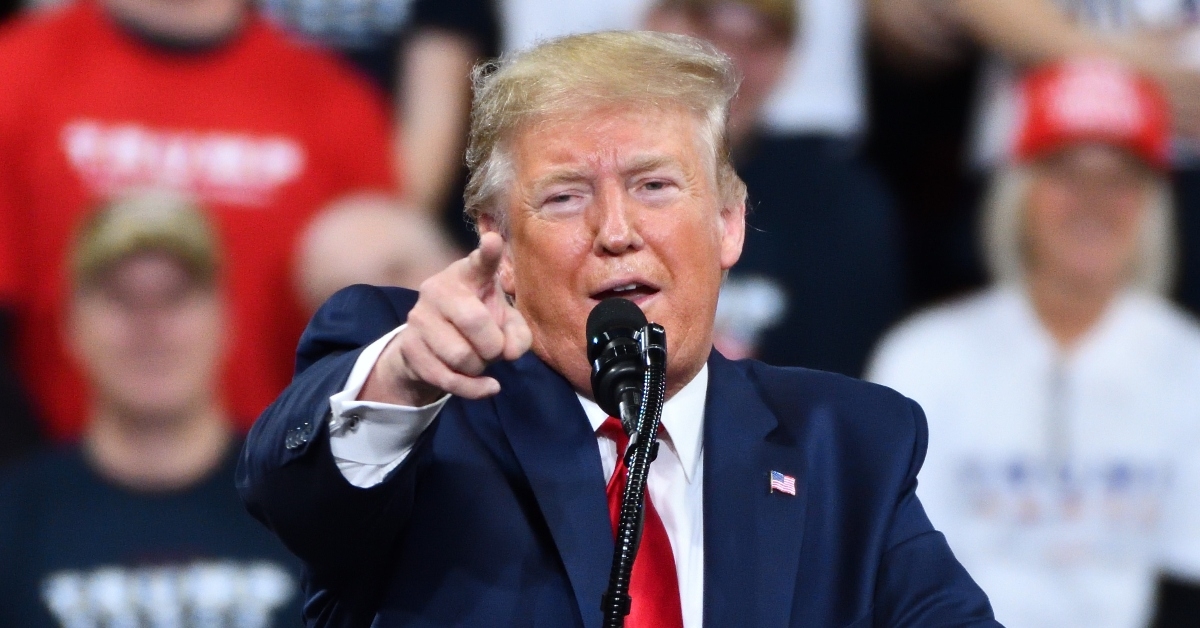
Trump has promised $5,000 to every adult U.S. citizen if Republicans win both the House and Senate in the 2026 midterms. He has also claimed that a Democratic victory would bring an economic depression comparable to 1929.
That framing matters because it blends two very different things. A cash payment would require laws, money, eligibility rules, and an agency process. A depression warning is an economic prediction, and a very severe one.
For your finances, the key point is simple. The $5,000 figure remains a political promise unless the necessary legal authority and funding are established.
Your $5,000 question
The number is the hook, but the details would determine whether you see anything at all. Trump has identified adult U.S. citizens as the intended recipients, but a payment program would still need final eligibility rules, including whether income limits apply and whether the money is taxable.
The payment would also need an administrative path. Treasury, the IRS, or another agency would likely need authority to identify eligible people and send money. That setup doesn't happen just because a political figure names a dollar amount.
So if you're looking at the $5,000 claim as household income, treat it as uncertain. It could matter politically, but it isn't a safe line item in your budget yet.
Who approves checks
Federal payments generally need legal authority and funding. That usually means Congress has to pass a bill, or an existing law has to clearly allow the administration to act.
That is the biggest practical gap between the claim and your bank account. Even if Trump wants the payment, the plan would still need a structure that survives the normal budget, tax, and legal process.
If lawmakers later write a bill, the exact language would matter more than the speech. The bill would tell you whether the payment is per person, per household, phased out by income, or limited to certain taxpayers.
Resolve $10,000 or more of your debt
National Debt Relief could help you resolve your credit card debt with an affordable plan that works for you. Just tell them your situation, then find out your debt relief options.4 <p>Please note that all calls with the company may be recorded or monitored for quality assurance and training purposes. Clients who are able to stay with the program and get all their debt settled realize approximate savings of 45% before fees, or 20% including our fees, over 24 to 48 months. All claims are based on enrolled debts. Not all debts are eligible for enrollment. Not all clients complete our program for various reasons, including their ability to save sufficient funds. Estimates based on prior results, which will vary based on specific circumstances. We do not guarantee that your debts will be lowered by a specific amount or percentage or that you will be debt-free within a specific period of time. We do not assume consumer debt, make monthly payments to creditors or provide tax, bankruptcy, accounting or legal advice or credit repair services. Not available in all states. Please contact a tax professional to discuss tax consequences of settlement. Please consult with a bankruptcy attorney for more information on bankruptcy. Depending on your state, we may be available to recommend a local tax professional and/or bankruptcy attorney. Read and understand all program materials prior to enrollment, including potential adverse impact on credit rating. "Debt-Free" applies only to enrolled credit cards, personal loans, and medical bills. Not mortgages, car loans, or other debts. Results vary.</p>
Sign up for a free debt assessment here.
Tariff math
Trump has linked the proposed $5,000 payments to tariff revenue and economic growth, but those claims do not establish an approved funding mechanism. There is also a distinction between who pays tariffs and who ultimately bears their cost.
Tariffs are charges on imported goods, collected from importers. Those costs might be absorbed by companies, passed partly to consumers, or handled in a mix of ways depending on the product and the market.
That means tariff revenue isn't the same thing as free money sitting in a separate refund account. Even if the government collects more money, Washington would need to decide whether to use it for checks, debt reduction, tax cuts, or other spending.
The depression warning
The 1929 comparison is meant to signal a severe crash, not a normal recession. That is why it stands out. It raises the emotional stakes fast.
But a depression-level downturn would require a much broader chain of damage than one blocked proposal or one election outcome. You would typically look for severe job losses, shrinking income, falling investment, market stress, tighter credit, and a long period of weak demand.
That is the evidence gap in the warning. Unless Trump or any official forecast connects those steps with clear economic data, treat the depression language as an alarm bell rather than a prediction you can plug into your rent, mortgage, or grocery plan.
Your real trigger points
For your day-to-day money, skip the biggest quote at first. Watch whether the claim turns into a written proposal.
A serious payment plan would likely include a funding source, an eligibility formula, and a delivery method. Trump has announced an amount and intended recipients, but those statements do not establish a payment schedule, application process, or final eligibility rules.
The same goes for the downturn warning. A real economic threat would show up across jobs data, consumer spending, credit conditions, business investment, and financial markets. One dramatic comparison doesn't replace those indicators.
Watch the paperwork
If this proposal moves from talking point to possible check, the paperwork would give you the clearest signal. Look for a bill number, legislative text, agency guidance, or a budget document that names the payment amount and who qualifies.
You should also watch for whether the payment is described as a rebate, dividend, tax credit, stimulus check, or refund. The law establishing any payment would determine eligibility, delivery timing, and tax treatment, regardless of the label used to promote it.
Until then, the safest move is to keep your current budget based on confirmed income. A possible $5,000 payment is worth following closely, but it shouldn't replace an emergency fund or a debt plan.
Earn $100 cash rewards bonus with this incredible card
The Wells Fargo Active Cash® Card (Rates and fees) has no annual fee and you can earn a $100 cash rewards bonus after spending $500 in purchases in the first 3 months.
Cardholders can also earn unlimited 2% cash rewards on purchases.
The best part? There's no annual fee.
Bottom line
Trump's claim gives you a dramatic choice: a possible $5,000 payment or an allegedly severe economic downturn. The reality is more complicated. One side needs legislation and payment rules, and the other needs evidence that a depression-level risk is actually forming.
The practical takeaway is to separate the promise from the process to withstand economic downturns. Watch for written policy, not just speeches. If a real payment plan appears, the details that matter most are eligibility, timing, taxes, and how the money would be funded.
Until a payment program is legally authorized and funded, treat the $5,000 as a political proposal rather than money you already have coming.
FAQs
What's the difference between a recession and a depression?
A recession is a broad decline in economic activity that lasts more than a few months. A depression generally describes a much deeper, longer downturn, with widespread unemployment and financial hardship. There is no single official threshold that defines a depression.
How can I prepare my finances for an economic downturn?
Start by reviewing essential expenses, building an emergency cushion, and reducing high-interest debt when possible. Even small, regular savings can give you more flexibility if your income drops or an unexpected bill arrives.
What should I do before spending an unexpected government payment?
Wait until you confirm that you qualify and know when the money will arrive. Once it does, consider whether overdue bills, emergency savings, or high-interest debt should take priority over discretionary purchases.
More from FinanceBuzz:
- Retire like the rich: 14 ways you could build wealth in your 50s.
- Find out if you could pay less for car insurance in just a few clicks.
- Make these 7 savvy moves when you have $1,000 in the bank.
- 14 moves seniors could benefit from but often forget about.







Intro Offer
INTRO OFFER: Unlimited Cashback Match for all new cardmembers. Plus, get a $200 statement credit when you spend $500 in the first 3 months after account opening.
Annual Fee $0 Why we like it