 Add Us On Google

When it comes to investing, many repeat the famous quote, "Be fearful when others are greedy and greedy when others are fearful," as a strategy and for good reason. This quote is from Warren Buffett, one of the most famous and successful investors of all time.
As the Chairman Emeritus and a member of the Board of Directors at Berkshire Hathaway, Buffett has outperformed the S&P 500 for over 60 years, from 1965 to the present, by nearly double its compounded annual gain. Because he can spot market and economic trends, many pay attention to what he says to make money moves. That also goes for Social Security.
Now Available: The Definitive Guide to Retirement Income
Many successful investors eventually reach the same moment. The saving is done, the portfolio is built, and the question quietly changes from how much can I grow this to how much can I take out? Get that second question wrong and decades of good investing can come apart in a handful of years.
That is exactly what The Definitive Guide to Retirement Income helps answer.1 <p class="">Investing in securities involves a risk of loss. Past performance is never a guarantee of future returns. Investing in foreign stock markets involves additional risks, such as the risk of currency fluctuations. Guides are provided by Fisher Investments. The publisher may be compensated when readers request a guide.</p> It covers what your retirement could actually cost, which income sources are worth using, and the withdrawal math that decides whether the money lasts. It is free today from Fisher Investments. Read More Here ›
Social Security is a societal duty
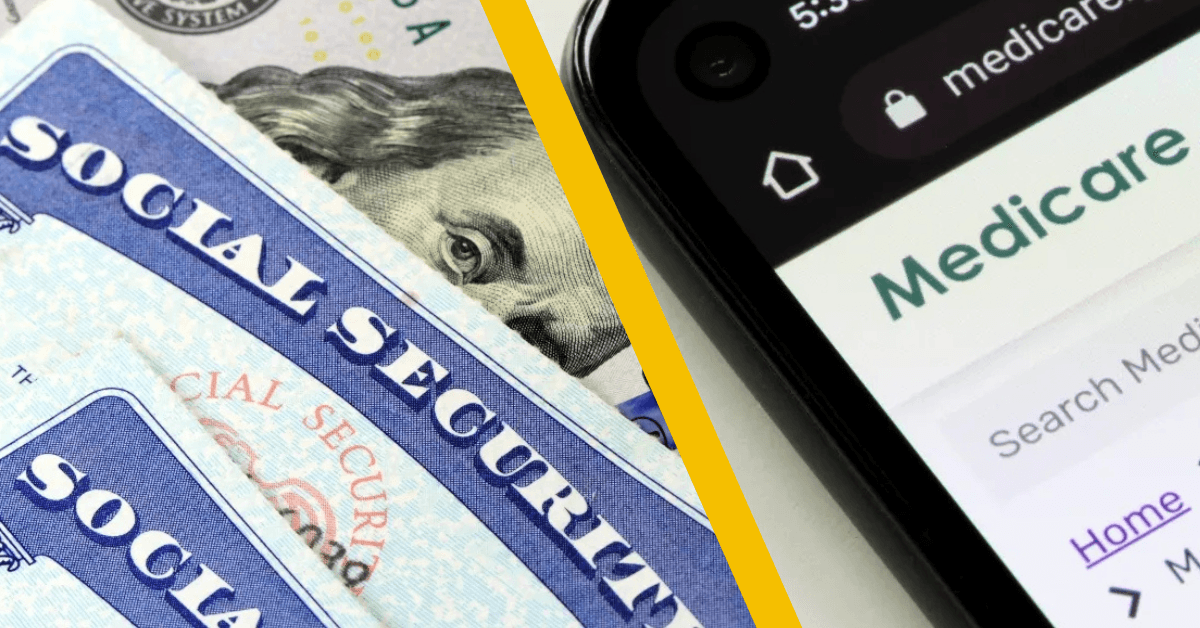
Buffett has been an advocate for Social Security benefits, most notably since 2005. At a Berkshire Hathaway meeting, he addressed questions about Social Security's sustainability for the millions who rely on it to cover their expenses.
"I think that in this country, extraordinarily rich country, that the people in their productive years can take care of those outside in both areas, even though the ratio of productive to non-productive has changed and is changing."
The money collected for Social Security benefits is collected through a U.S. federal payroll tax known as the Federal Insurance Contributions Act (FICA). Once collected, the funds are placed into the Old-Age and Survivors Insurance (OASI) Trust Fund. The OASI then distributes benefits from the money it currently has in reserve.
The issue is that the OASI is being depleted faster than current funding sources can replenish it. As of now, trustees predict that the OASI will only be able to pay out the full amount of what retirees are scheduled to receive until Q4 2032. After that, the OASI will only be able to pay up to 78% of the previously planned benefits, leaving a significant shortfall for millions.
Here are Buffett's ideas for fixing this issue.
Increase taxes for the rich
Buffett has often been vocal about raising taxes on the ultra-wealthy. In 2011, Buffett wrote an opinion piece for The New York Times suggesting that Congress raise federal taxes on those who earn an income exceeding $1,000,000. This came after he realized his tax rate was lower than that of his employees, despite earning significantly more.
Regarding Social Security, during a 2005 meeting, Buffett stated, "If you ask me what I would do to change it now, I would means test it. I would lift the $90,000 [income cap] way up. In fact, I might apply it, you know, on all income. Then you'd really get people's attention."
While the income cap on FICA taxes will be $192,300 in 2027, the sentiment rings as true now as it did in 2005. In fact, Senator Ruben Gallego has proposed a bill known as the You Earned It, You Keep It Act. If this bill passed, annual earnings over $250,000 would be subject to the FICA tax rate. The bill's proponents claim this could keep the OASI fully funded until 2058.
Buffett continued his thoughts on this matter, saying, "They're getting taxed for Social Security and they're getting taxed for income on their income. And they're paying a higher rate, or an equal rate overall, in many cases, to the same rate compared to the rate I pay. And I think that's sort of nonsense in this society."
Raise the full retirement age
Through the Social Security Amendments of 1983, the Social Security Administration gradually raised the retirement age from 65 to 67 to defer payments. People could collect Social Security as early as age 62, but they would receive a reduced benefit. Conversely, waiting until age 70 is one way someone could increase their benefit.
In recent years, some lawmakers have argued for further raising the full retirement age, citing significant gains in life expectancy. This can strain the system, as many people collect Social Security for longer.
Warren Buffett has acknowledged this in the past as well.
"I would certainly increase the retirement age," Buffett noted at a Berkshire Hathaway meeting in 2005. "The world in 2005 is much different than the world in 1937, in terms of longevity prospects and the ability to function productively."
Additional time spent in the workforce means not only that we pay into Social Security for a longer period, but also that we decrease the length of time we collect full benefits. This move could help sustain the OASI substantially, especially as the population continues to age.
Released: The Definitive Guide to Retirement Income (Sponsor)
Most people spend their entire working lives focusing on one thing: growing a pile of money. Then they retire and discover the skill they actually need is close to the opposite. Turning that pile into steady income, year after year, through good markets and bad, without ever running out. It may be the least discussed and most consequential transition in personal finance, and plenty of otherwise careful investors walk into it with no real plan.
That is exactly what The Definitive Guide to Retirement Income helps answer.1 <p class="">Investing in securities involves a risk of loss. Past performance is never a guarantee of future returns. Investing in foreign stock markets involves additional risks, such as the risk of currency fluctuations. Guides are provided by Fisher Investments. The publisher may be compensated when readers request a guide.</p> It is a free guide from Fisher Investments covering what your retirement will really cost, where the cash flow should come from, and how much you can safely withdraw each year. Learn More Here ›
Cutting benefits is not the solution
As stated before, Buffett doesn't mince words when it comes to the unfair taxing of lower-wage workers compared to the rich.
"When it comes to making a lot of money, it's not equal opportunity in this country," Buffett commented in 2005. "I believe that a rich country like ours should not give lower [Social Security] benefits than what takes place now."
Buffett sees the importance of everyone's contribution to society and how the well-off should be taking care of those with fewer means.
"I see people living with fear about health care or living with fear about running out of money in their old age. And I think a society should try to minimize the fear that their inhabitants experience."
Bottom line
Buffett makes it quite clear that Social Security benefits are essential for society, and that it is the duty of those able and well-off to help provide for those who need help.
To ensure benefits don't decrease, experimenting with what is considered full retirement age and, most importantly, increasing the income cap are crucial. And these changes could soon come to fruition.
As stated, the You Earned It, You Keep It Act is currently being proposed to lawmakers. Not only would the bill increase the income cap, but it would also eliminate federal taxes on Social Security benefits. Additionally, the Trump administration has floated the idea of raising the full retirement age.
Yet, Social Security Administration Commissioner Frank Bisignano posted on X that raising the retirement age is "not under consideration," at least for now.
Regardless of what the future brings, it is best to prepare yourself financially for different outcomes.
More from FinanceBuzz:
- Retire like the rich: 14 ways you could build wealth in your 50s.
- Find out if you could pay less for car insurance in just a few clicks.
- Make these 7 savvy moves when you have $1,000 in the bank.
- 14 moves seniors could benefit from but often forget about.


- Huge discounts on travel, groceries, prescriptions and more
- Access to financial planning resources and health tools
- Join AARP and get 25% off with automatic renewal