 Add Us On Google

Contrary to popular belief, waterfront living, whether on a Gulf shoreline, a Great Lake, a tidal river, or a New England bay, can come with rents that leave room in a fixed budget, along with walkable downtowns, shoreline parks and trails, and a pace of life built for stretching retirement dollars further.
Retiring near the water is often treated as a luxury reserved for deep pockets, but the following towns tell a different story.
Editor's note: Rent and home value figures come from Zillow. Cost of living figures come from Sperling's BestPlaces.
Now Available: The Definitive Guide to Retirement Income
Many successful investors eventually reach the same moment. The saving is done, the portfolio is built, and the question quietly changes from how much can I grow this to how much can I take out? Get that second question wrong and decades of good investing can come apart in a handful of years.
That is exactly what The Definitive Guide to Retirement Income helps answer.1 <p class="">Investing in securities involves a risk of loss. Past performance is never a guarantee of future returns. Investing in foreign stock markets involves additional risks, such as the risk of currency fluctuations. Guides are provided by Fisher Investments. The publisher may be compensated when readers request a guide.</p> It covers what your retirement could actually cost, which income sources are worth using, and the withdrawal math that decides whether the money lasts. It is free today from Fisher Investments. Read More Here ›
Gulfport, Mississippi
Median rent: $1,131
Average home value: $195,958.97
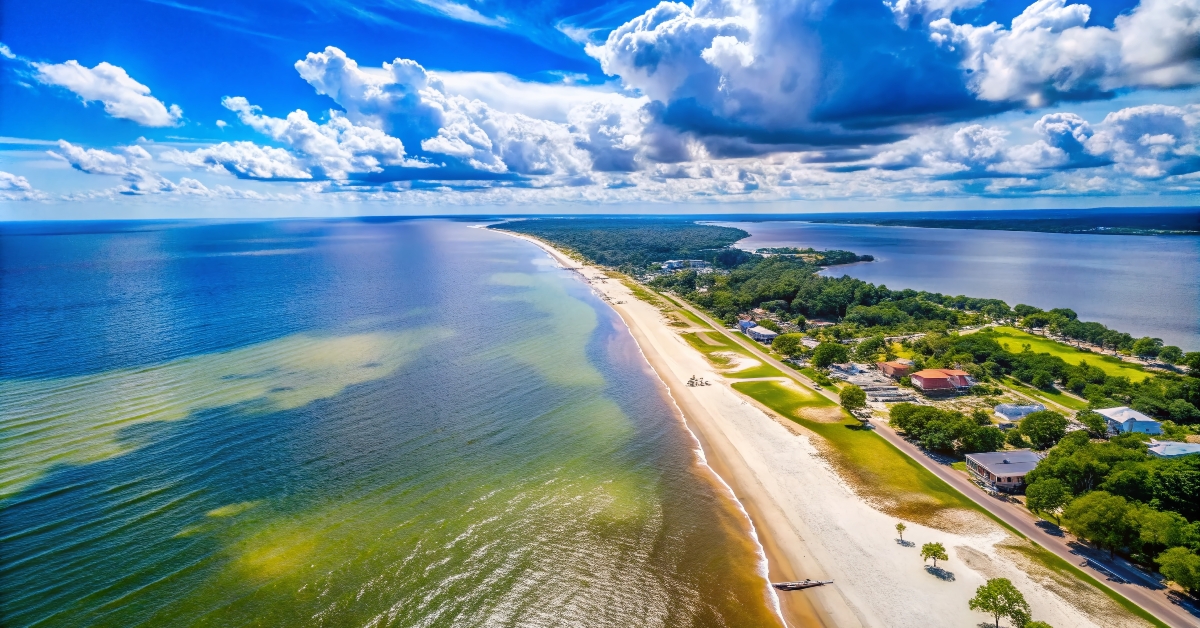
Gulfport sits on Mississippi Sound, an arm of the Gulf of Mexico, with a long man-made sand beach and a working harbor that gives the city a lived-in coastal rhythm rather than a resort-town feel. A local two-year college adds some youthful energy, and the barrier islands of Gulf Islands National Seashore lie just offshore, easily reached for a day trip.
Mississippi does not tax Social Security benefits, which helps retirees keep more of their monthly income. The cost of living index sits at 82.6, about 17.4% below the national average, and a regional hospital system with acute-care and trauma services covers health care needs locally.
Portsmouth, Virginia
Median rent: $1,282
Average home value: $254,490.08
Portsmouth's identity is tied to the tidal Elizabeth River, where a maritime and naval heritage shapes the waterfront and downtown parks, and trails invite an evening stroll along the water. A community college campus in the city adds a bit of college-town energy to the mix.
Virginia does not tax Social Security benefits, though the state does levy its own income tax on other income. The cost of living index is 90.4, about 9.6% below the national average, and a regional health system provides general medical care close to home.
Erie, Pennsylvania
Median rent: $808
Average home value: $193,250.15
Erie sits on Lake Erie, where a recurved peninsula wraps around a natural bay to form a state park with shoreline trails and beaches. That same peninsula encloses a natural harbor, keeping the city's working identity as a lake port intact. Several local colleges keep a college-town buzz going.
Pennsylvania does not tax Social Security benefits, though the state does have its own income tax. The cost of living index here is 80.8, about 19.2% below the national average, and an area hospital offering inpatient, outpatient, and emergency services serves as a regional referral hub.
Released: The Definitive Guide to Retirement Income
Most people spend their entire working lives focusing on one thing: growing a pile of money. Then they retire and discover the skill they actually need is close to the opposite. Turning that pile into steady income, year after year, through good markets and bad, without ever running out. It may be the least discussed and most consequential transition in personal finance, and plenty of otherwise careful investors walk into it with no real plan.
That is exactly what The Definitive Guide to Retirement Income helps answer.1 <p class="">Investing in securities involves a risk of loss. Past performance is never a guarantee of future returns. Investing in foreign stock markets involves additional risks, such as the risk of currency fluctuations. Guides are provided by Fisher Investments. The publisher may be compensated when readers request a guide.</p> It is a free guide from Fisher Investments covering what your retirement will really cost, where the cash flow should come from, and how much you can safely withdraw each year. Learn More Here ›
Racine, Wisconsin
Median rent: $1,215
Average home value: $200,228.87
Racine's compact, water-oriented layout is built around a well-maintained path that links beaches, a marina, and downtown along Lake Michigan, while the Root River winds through town before emptying into the lake. It is an easy place to explore on foot, with parkland tracing much of the shoreline.
Wisconsin does not tax Social Security benefits, though it does tax other income at the state level. The cost of living index is 86.2, about 13.8% below the national average, and a regional hospital system handles general health care for the area.
Baytown, Texas
Median rent: $1,354
Average home value: $241,332.04
Baytown sits along Galveston Bay near the outlet of the San Jacinto River, with bayou-front parks, trails, and a birding trail tracing the shoreline for those who enjoy slower outdoor pursuits. A local college lends some campus energy to an otherwise laid-back bayside community.
Texas does not tax Social Security benefits, and the state has no income tax at all, a combination that can make a real difference in retirement budgeting. The cost of living index sits at 96.9, about 3.1% below the national average, and a regional hospital system covers Baytown and its surrounding communities.
Duluth, Minnesota
Median rent: $1,077
Average home value: $279,279.30
Duluth centers on Lake Superior, with a lakefront walkway, ridgeline parks, and wooded creek trails giving the city a generous helping of waterfront parks and trails. A four-year college adds campus energy to a hiking culture that runs from trails inside the city limits out to the regional long-distance trail beyond it, all alongside a working port.
Minnesota does tax Social Security benefits, but residents with an adjusted gross income up to $86,410 individually, or up to $110,780 filing jointly, owe no state tax on that income. The state also has its own income tax. The cost of living index here is 84.7, about 15.3% below the national average, and a regional health system serves the community.
New Bedford, Massachusetts
Median rent: $1,225
Average home value: $423,135.90
New Bedford's working waterfront sits where the harbor meets the mouth of the Acushnet River, which flows into Buzzards Bay, and a paved harbor walk and hurricane-barrier path make the shoreline easy to cover on foot or by bike. The cobblestone downtown carries a preserved national historical park along with art galleries and studios, and the commercial fishing industry that built the city is still active.
Massachusetts does not tax Social Security benefits, though the state does tax other income. The cost of living index runs 111.7, about 11.7% above the national average, the trade-off for this much historic character and waterfront access. A regional health system with hospital campuses serves the greater New Bedford area.
Gary, Indiana
Median rent: $968
Average home value: $83,679.84
Gary pairs low home values with real beach access, as a national park's dune-and-beach terrain reaches into the city and waterfront parks and trails follow the Lake Michigan shore. A local college campus contributes college-town energy to the community.
Indiana does not tax Social Security benefits, a plus for retirees on a fixed income. The cost of living index is 87.3, about 12.7% below the national average, and a regional hospital system with multiple area campuses serves residents' health care needs.
Kenosha, Wisconsin
Median rent: $1,263
Average home value: $260,176.52
Kenosha's lakefront is dotted with harbor-side promenades, a marina, and lighthouses, and the waterfront parks and trails along Lake Michigan connect easily to a walkable downtown full of shops and dining. A nearby college adds a touch of college-town energy.
Wisconsin does not tax Social Security benefits, although the state does tax other income. The cost of living index sits at 90.8, about 9.2% below the national average, and a regional health system with local hospital campuses serves Kenosha and the surrounding area.
Get instant access to hundreds of discounts
Over 50? Join AARP today— because if you’re not a member you could be missing out on huge perks like discounts on travel, dining, and even prescriptions.
Get 25% off membership — just $15 for your first year with auto-renewal — and a free gift if you join today.
Lorain, Ohio
Median rent: $1,004
Average home value: $145,770.52
Lorain blends an industrial-heritage feel with public beach parks and walking and biking trails along Lake Erie, plus green space tracing the Black River. Community festivals and cultural events give the town a close-knit, small-city character that suits retirees looking for an easygoing pace.
Ohio does not tax Social Security benefits, which helps retirement income go further. The cost of living index here is 81, about 19% below the national average, and a regional hospital system with facilities in town covers area residents' health care needs.
Waukegan, Illinois
Median rent: $1,322
Average home value: $226,867.29
Waukegan's Lake Michigan shoreline includes a public beach, marina, and harbor, plus lakefront parks that anchor the town's outdoor life. Downtown carries an arts-district feel, with galleries, murals, and an art-walk tradition, and a local college's downtown campus adds some college-town energy.
Illinois does not tax Social Security benefits, though the state does tax other income. The cost of living index is 97, about 3% below the national average, and a regional hospital system provides routine and emergency care to residents and retirees.
Bottom line
None of these towns ask seniors to choose between water views and a manageable budget when planning for retirement. Whether it is a Gulf Coast harbor, a Great Lakes beach, or a New England bay, each place pairs a rent under $1,400 with the kind of waterfront parks, trails, and small-city character that make everyday life feel a little more like a vacation.
For retirees weighing where a fixed income can go furthest without sacrificing scenery, these 11 towns are a starting point worth a closer look.
This article is for informational purposes only and should not be considered investment advice.
More from FinanceBuzz:
- Retire like the rich: 14 ways you could build wealth in your 50s.
- Find out if you could pay less for car insurance in just a few clicks.
- Make these 7 savvy moves when you have $1,000 in the bank.
- 14 moves seniors could benefit from but often forget about.








- American Hartford Gold helps individuals protect their retirement by rolling over IRAs and 401(k)s into physical gold.
- Includes FREE IRA rollover and storage for up to 3 years.
- Get up to $20,000 in free silver on qualifying purchases.