 Add Us On Google

Florida still pulls retirees in with no state income tax and winters you can spend outside. What the brochure skips is the insurance bill, the flood map, and the three-month wait for a primary care appointment.
Before you put money down, it pays to build a stress-free retirement plan around what Florida actually costs, not the listing-photo version.
These 10 cities all come with documented problems for people living on a fixed income. Nobody is saying every resident regrets moving there. Each one is simply a poor fit for at least one common retirement priority.
Set up eligible direct deposit - pocket up to $400
Set up an eligible direct deposit with SoFi Checking and Savings and you could earn a bonus of $50 or $400.1 <p>New and existing Checking and Savings members who have not previously enrolled in Direct Deposit with SoFi are eligible to earn a cash bonus of either $50 (with at least $1,000 total Eligible Direct Deposits received within 25 calendar days of your first Eligible Direct Deposit of $1 or more) OR $400 (with at least $5,000 total Eligible Direct Deposits received within 25 calendar days of your first Eligible Direct Deposit of $1 or more). Cash bonus amount will be based on the total amount of Eligible Direct Deposit received within 25 calendar days of your first Eligible Direct Deposit of $1 or more. If you have satisfied the Eligible Direct Deposit requirements but have not received a cash bonus in your Checking account, please contact us at 855-456-7634 with the details of your Eligible Direct Deposit. Direct Deposit Promotion begins on 5/15/2026 and will be available through 12/31/2026. Full terms at <a href="https://www.sofi.com/banking/">sofi.com/banking</a>. SoFi Checking and Savings is offered through SoFi Bank, N.A., Member FDIC. SoFi members with Eligible Direct Deposit can earn 3.30% annual percentage yield (APY) on savings balances (including Vaults) and 0.50% APY on checking balances. There is no minimum Eligible Direct Deposit amount required to qualify for the 3.30% APY for savings (including Vaults). Members without Eligible Direct Deposit will earn 0.80% APY on savings balances (including Vaults) and 0.50% APY on checking balances. Interest rates are variable and subject to change at any time. These rates are current as of 9/23/26. Fees may reduce earnings. Additional information can be found at <a href="https://d32ijn7u0aqfv4.cloudfront.net/wp/wp-content/uploads/raw/SoFi-Bank-Rate-Sheet-September-23-2026.pdf">http://www.sofi.com/legal/banking-rate-sheet</a>.</p> Make the switch, set up eligible direct deposit, earn the bonus. It basically takes no extra work at all other than following these steps.
Why people are switching: This account earns up to an insane 4.40% APY2 <p>Earn up to 4.40% Annual Percentage Yield (APY) on one SoFi Savings account with a 1.10% APY Boost (added to the 3.30% APY as of 10/20/26) for up to 6 months. Open your first SoFi Checking and Savings account and receive eligible direct deposits OR qualifying deposits of $5,000 every 31 days by 12/31/27. Rates are variable, subject to change. Terms apply at <a href="https://www.sofi.com/banking/#4">sofi.com/banking#4</a>. SoFi Bank, N.A. Member FDIC.</p> on savings for up to six months on new accounts (3.30% APY standard + 1.10% APY boost; terms apply) on top of that $50 or $400 bonus.1 <p>New and existing Checking and Savings members who have not previously enrolled in Direct Deposit with SoFi are eligible to earn a cash bonus of either $50 (with at least $1,000 total Eligible Direct Deposits received within 25 calendar days of your first Eligible Direct Deposit of $1 or more) OR $400 (with at least $5,000 total Eligible Direct Deposits received within 25 calendar days of your first Eligible Direct Deposit of $1 or more). Cash bonus amount will be based on the total amount of Eligible Direct Deposit received within 25 calendar days of your first Eligible Direct Deposit of $1 or more. If you have satisfied the Eligible Direct Deposit requirements but have not received a cash bonus in your Checking account, please contact us at 855-456-7634 with the details of your Eligible Direct Deposit. Direct Deposit Promotion begins on 5/15/2026 and will be available through 12/31/2026. Full terms at <a href="https://www.sofi.com/banking/">sofi.com/banking</a>. SoFi Checking and Savings is offered through SoFi Bank, N.A., Member FDIC. SoFi members with Eligible Direct Deposit can earn 3.30% annual percentage yield (APY) on savings balances (including Vaults) and 0.50% APY on checking balances. There is no minimum Eligible Direct Deposit amount required to qualify for the 3.30% APY for savings (including Vaults). Members without Eligible Direct Deposit will earn 0.80% APY on savings balances (including Vaults) and 0.50% APY on checking balances. Interest rates are variable and subject to change at any time. These rates are current as of 9/23/26. Fees may reduce earnings. Additional information can be found at <a href="https://d32ijn7u0aqfv4.cloudfront.net/wp/wp-content/uploads/raw/SoFi-Bank-Rate-Sheet-September-23-2026.pdf">http://www.sofi.com/legal/banking-rate-sheet</a>.</p> That's way better than the measly 0.38% APY (as of 10/19/26)3 <p>Based on <a href="https://www.fdic.gov/national-rates-and-rate-caps">this</a> FDIC data, as of 6/15/26.</p> national average savings accounts offer.
No monthly fees and no surprises. Open your account and earn up to a $400 bonus
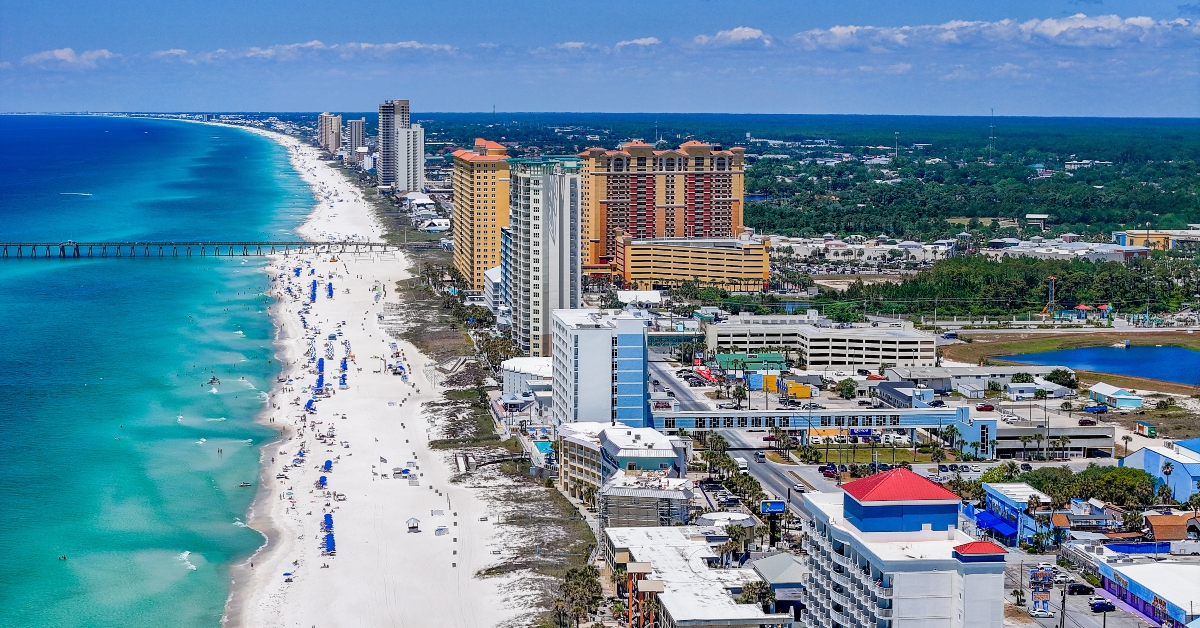
Miami, Florida
Price a condo in Miami and the sticker shock keeps going after the mortgage. Housing costs run 56.4% above the national average, and MoneyGeek puts the average home insurance premium at $16,123 a year, well past Florida's already punishing $10,384 statewide average.
Miami-Dade scores near the maximum for both hurricane and flood risk on FEMA's National Risk Index, so windstorm and flood coverage are both unavoidable. Traffic piles on. Congestion lasts more than 6.5 hours on the average weekday, the third-worst total in the country, according to a ConsumerAffairs study reported by ClickOrlando.
Crime depends heavily on where you land, with Overtown and Liberty City seeing far more of it than Coral Gables or Key Biscayne. Health care can wobble, too.
A recent contract standoff threatened to push UHealth doctors out of network for UnitedHealthcare and Preferred Care Network Medicare members, which could have meant longer drives or bigger bills, though Jackson Health's own hospitals and ER would have stayed in network.
The upside is real. Jackson Memorial Hospital has more than 1,550 licensed beds, and lower-crime enclaves such as Coral Gables and Key Biscayne offer a calmer version of the same metro.
Fort Lauderdale, Florida
Flood maps can change under you. When new FEMA maps took effect on July 31, 2024, the city's special flood hazard area grew to roughly 14,800 acres, putting about 63.7% of Fort Lauderdale in a high-risk zone and pulling in roughly 13,853 more structures.
Bankrate puts average home insurance here at $10,917 a year for $300,000 in dwelling coverage, 87% above the statewide average of $5,838. Most owners still need a separate flood policy on top of that.
The city's Class 7 rating in FEMA's Community Rating System takes 15% off National Flood Insurance Program premiums inside the high-risk zone, which helps but hardly erases the bill.
Getting around mostly means driving, with a citywide Walk Score of 56 and a Transit Score of 38. Redfin also flags extreme heat risk alongside hurricanes, which matters for older residents during both evacuations and August.
One genuine perk: Fort Lauderdale is a Brightline stop, 30 minutes from Miami and 40 from West Palm Beach, and neighborhoods like Victoria Park and Flagler Village make car-light living workable.
Miami Beach, Florida
Barrier-island living comes with a catch the city spells out itself. Miami Beach's emergency management page says the whole city is expected to leave when an evacuation order comes, and there are no hurricane shelters on the island, so everyone funnels onto causeways such as the MacArthur and the Julia Tuttle.
Climate Central puts the odds of at least one flood over 3 feet in the area between now and 2050 at 73%, and Redfin says 99% of local properties are likely to be severely affected by flooding over the next 30 years. Insurance follows Miami's pricing, roughly $16,123 a year.
Housing is no bargain either. Redfin recorded a $625,000 median sale price in November 2025, up 5% from a year earlier and 45% above the national average. CrimeGrade.org grades the city a D for violent crime, placing it in the 22nd percentile for safety.
Day to day, though, this is one of the few Florida addresses where you can skip the car. Walk Score rates the city 76, South Beach scores a 95, and the citywide trolley is free.
Cape Coral, Florida
One Cape Coral couple told NPR they already pay $8,000 a year for insurance. That was before FEMA moved in 2024 to strip the city's long-standing flood insurance discount over improper rebuilding after Hurricane Ian, a decision that would raise flood rates 25% right away. The city appealed.
Ian came ashore near Cape Coral as a Category 4 on September 28, 2022, and its high winds and flooding caused more than $117 billion in damage. Redfin still rates the city a major flood risk, with roughly 89% of properties likely to be affected, and names hurricanes the top hazard.
Serious medical care usually means driving. Cape Coral Hospital is the city's only full-service hospital, the mayor has said first responders frequently transport residents outside the city for critical care, and a second hospital is not expected until 2029.
Getting there means a car for most people. The mean commute runs 29.9 minutes, per Census figures, and transit amounts to a few LeeTran bus routes.
What keeps people here is the water. The city has more than 400 miles of freshwater canals winding through its neighborhoods.
Fort Myers, Florida
Rebuilding after Ian came with a federal catch. Under FEMA's 50-50 rule, any new or rebuilt structure in a special flood hazard zone has to meet Florida's current building code, with the lowest floor at least a foot above the base flood elevation. The areas Ian hit hardest sit in those zones.
Ian caused an estimated $109.5 billion in damage in Florida, the costliest hurricane in state history, and about 90% of structures on Fort Myers Beach were damaged or destroyed. NerdWallet's 2026 data puts average home insurance at $3,725 a year, in a market where carriers keep raising rates or leaving the state.
NeighborhoodScout's FBI-based figures for 2023 show a violent crime rate of 3.67 per 1,000 residents, higher than 71% of Florida's cities and towns. Lee County also carries six active federal Health Professional Shortage Area designations, half of them for primary care, while its retiree population keeps climbing.
Buying in is still comparatively cheap. Redfin reported a $345,000 median sale price in November 2025, about 11% below the national average, though the same report flags hurricanes as the top risk and 36% of properties as flood-exposed.
Port St. Lucie, Florida
Port St. Lucie grew faster than any other large U.S. city in 2025, its fifth straight year on top, adding 9,131 people for 3.5% growth. Services have not kept pace with the crowd.
Homeowners insurance averages $7,942 a year, about 205% above the national average, according to InsuranceCostCity, with Insurance.com landing in the same range at $7,901 for $300,000 in dwelling coverage.
WPTV called five primary care offices on the Treasure Coast and found waits running from a couple of weeks to five months, with one office unable to schedule until the next year. Local physicians have said there are not enough beds or doctors for the growing population.
You will drive here. About 98.5% of commuters get to work by car while 0.2% use public transportation, and all three 2026 mayoral candidates named traffic a major issue, with one calling the St. Lucie West area a nightmare.
The trade-off is affordability: single-family homes around $400,000 and a fast-expanding job base led by the Southern Grove Jobs Corridor.
Daytona Beach, Florida
Crime is the first thing to weigh. NeighborhoodScout records 30 crimes per 1,000 residents, with more than 92% of Florida communities safer, and AreaVibes, using 2024 FBI reports, puts the overall crime rate 55% above the national average alongside 928 violent crimes per 100,000 residents.
Water is the second. First Street Foundation counts 14,589 properties at risk of flooding over the next 30 years, or 43.7% of the city, and rates hurricane wind exposure as extreme.
Coverage gaps make health care a gamble. One in five adults ages 19 to 64 in Volusia County has no health insurance, more than 63,000 people, and the Volusia Free Clinic says an emergency room visit at Halifax Health averages $11,200.
Costs are gentler than South Florida, though. Median home prices run 26% below the national average, overall cost of living sits about 1% below it, Citizens premiums in the county average roughly $1,620 a year, and both AdventHealth Daytona Beach and Halifax Health Medical Center serve insured residents.
Key West, Florida
A county emergency management official has warned that the Keys face the highest hurricane vulnerability of any place in the 50 states, with evacuation routes a constant concern. First Street rates wind risk extreme, with every home carrying some exposure and a 1-in-100-year storm capable of 234 mph gusts.
Flood risk is extreme too, with 97.1% of properties projected to face it within 30 years. Monroe County has the highest average homeowners premium in Florida at $7,863 a year including wind coverage, per the state Office of Insurance Regulation.
Then there is the price of entry. Redfin put the median sale price at $1.3 million for the three months ending June 2026, up 28% in a year. Lower Keys Medical Center, with 167 beds, is the only full-service hospital for the Lower Keys, and the next one sits about 82 miles away.
Old Town is the saving grace. Walk Scores there run from 63 to 74, with the historic district rated "Very Walkable," so car-light retirees can handle plenty of errands on foot.
Pensacola, Florida
The Panhandle carries the second-highest hurricane strike risk in Florida, behind only the Miami and South Atlantic coastline, and the recent storm list is long: Hermine, Irma, Michael, Sally, and Helene. Sally alone produced 195 flood insurance claims in Pensacola.
Insure.com puts average home insurance at $7,010 a year for $300,000 in dwelling coverage, $4,435 more than the national average of $2,575. Statewide, Florida premiums averaged $8,292 and are projected to reach about $8,458 by the end of 2026.
Doctors are thin on the ground. Patients tell WEAR-TV that a primary care appointment typically takes one to two months, and the Escambia County Medical Society knows of at least 10 physicians in Escambia and Santa Rosa counties who left their employers and then the area over non-compete clauses.
Crime is not the knock here. FBI 2024 data show a violent crime rate of 130.6 per 100,000 residents, roughly a 1-in-766 chance in a given year. And Conde Nast Traveler readers voted Pensacola Beach and nearby Navarre Beach the top two beaches in the country in 2025.
Get instant access to hundreds of discounts
Over 50? Join AARP today— because if you’re not a member you could be missing out on huge perks like discounts on travel, dining, and even prescriptions.
Get 25% off membership — just $15 for your first year with auto-renewal — and a free gift if you join today.
Sarasota, Florida
Sarasota sits above every price benchmark that matters. Zillow's median home value of $409,878 as of August 2026 tops the county, state, and national medians, and Insurify puts average home insurance at $6,826 a year for $300,000 in dwelling coverage.
Florida is the most expensive state for homeowners insurance, according to a 2025 Consumer Federation of America report, and Redfin flags Sarasota for major flood risk with hurricanes as the top hazard, which keeps those premiums elevated.
Southwest Florida's physician shortage is especially acute, and the Florida Health report found nearly a third of the state's doctors are older than 60. A retiree calling a specialist after a new diagnosis may hear the practice is not taking new Medicare patients, or that the next opening is months out.
Driving is no treat either. HireAHelper's analysis of Census survey data ranks the Bradenton-Sarasota-North Port metro the seventh-worst midsize metro for commute times, averaging 24.9 minutes one way.
The counterweight is Sarasota Memorial Hospital, an 800-plus-bed regional system with national quality rankings, so retirees who stay in network have strong care close to home.
Bottom line
Plenty of people live happily in all 10 of these cities. They are poor fits for particular priorities, whether that is keeping insurance affordable, living without a car, or getting a specialist appointment this month instead of next spring.
So shop the address, not the state. Get real insurance quotes on the specific house, check its flood zone and hurricane evacuation zone, confirm which hospitals and Medicare networks are nearby, and look for ways to free up your retirement budget before the first premium hits.
This article is for informational purposes only and should not be considered investment advice.
More from FinanceBuzz:
- Retire like the rich: 14 ways you could build wealth in your 50s.
- Find out if you could pay less for car insurance in just a few clicks.
- Make these 7 savvy moves when you have $1,000 in the bank.
- 14 moves seniors could benefit from but often forget about.


- American Hartford Gold helps individuals protect their retirement by rolling over IRAs and 401(k)s into physical gold.
- Includes FREE IRA rollover and storage for up to 3 years.
- Get up to $20,000 in free silver on qualifying purchases.