

 Add Us On Google
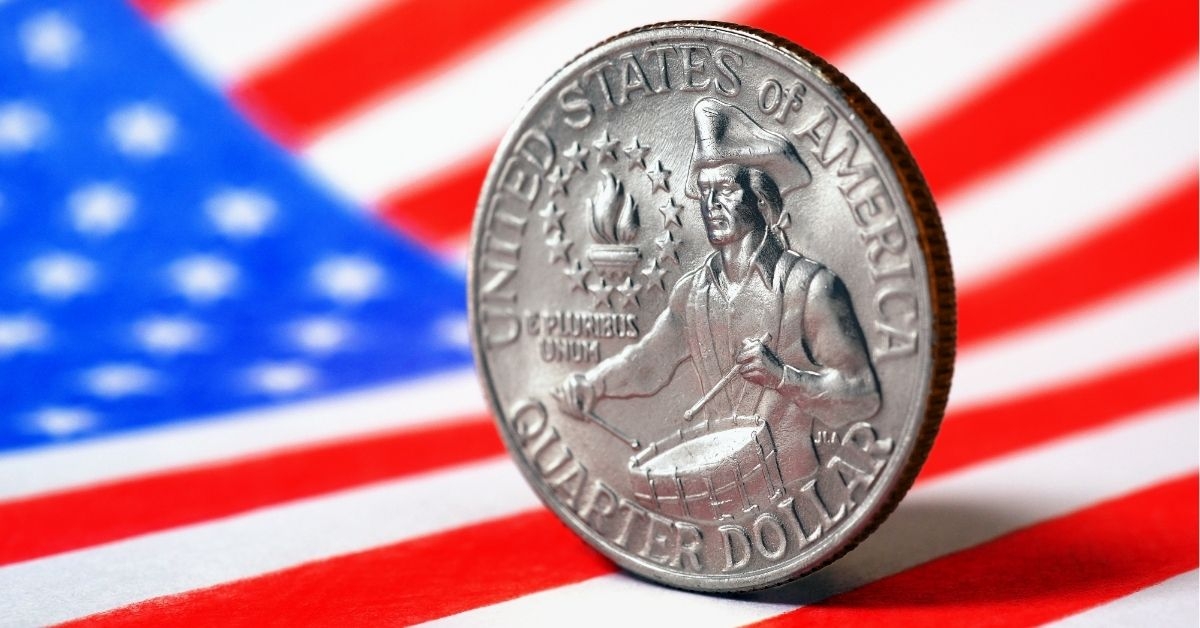
Usually, making some extra money on the side takes more effort than just opening your wallet and shaking out the spare change. But a very small number of quarters still in circulation are actually worth more than face value, and if you're lucky (very lucky — valuable circulating quarters aren't exactly a dime a dozen), you could turn what you thought was $0.25 into a tidy profit.
Keep reading to learn about errors, misprints, and other standout features that make some quarters worth appraising rather than spending.
Editor's note: Unless otherwise noted, estimated market values come from USA Coin Book.
Download this gaming app that's paid out over $500 million
A company called Freecash has compiled all sorts of quick cash tasks from advertisers and market research companies. Freecash has paid out over $500 million to users since 2019, and has an "excellent" Trustpilot rating based on 300,000+ reviews.
Sign up here to see how much you could earn.
2004-D Wisconsin "extra leaf high" quarter
Estimated market value: $92
One iteration of the Wisconsin state quarter printed in 2004 contains an extra leaf on the left side of the sheaf of corn showcased on the reverse ("tails") side. Like a lot of the coins on this list, the "extra leaf" quarter probably results from a die flaw, meaning an error in the stamp (or die) used to press images onto the coins.
In some printings of the coin, the extra leaf appears high on the left side of the sheaf of corn. According to Remitly, these coins used to sell for hundreds of dollars. These days, a circulated version of this coin sells for an average of $92, but mint condition, never-circulated coins can sell for as much as $281 per coin. While several coins are listed on eBay for prices over $200, many of these are also marked "or best offer," and the coins are common enough that there are several dozen on offer.
2004-D Wisconsin "extra leaf low" quarter
Estimated market value: $56
Oddly enough, a version of the Wisconsin "extra leaf" coin with the extra leaf on the bottom left-hand side of the standard ear of corn typically sells for less than the "extra leaf high" versions. While a mint-condition coin could sell for between $148 and $217, USA Coin Book thinks you're more likely to sell one of these used coins for closer to $60.
2005-P Minnesota Doubled Die Quarter
Estimated market value: $6.25
A doubled die refers to a die error where a second, misaligned image is impressed on the coin on top of the first image. In this printing of Minnesota state quarters, the doubled die error means the ghostly outline of a pine tree hovers next to one of the pine trees on the right.
While Remitly reports that some of these coins once sold for as much as $100, today's value is much lower. Still, selling a quarter for just $6 is a remarkable return on investment, and the cost is low enough that this quarter makes a good entry point for first-time collectors. Plus, depending on the coin's condition, you could sell it for more: most current eBay listings of the coin ask for between $20 and $35.
Stop overpaying when you shop online
Tired of chasing coupon codes and comparing prices across tabs? Try Capital One Shopping — a free browser extension that scours the internet for coupons and flags better prices while you shop.
Add it today and you could stop overpaying!1 <p>Capital One Shopping compensates us when you get the browser extension using the links we provided.</p>
1999-P Delaware "spitting horse" error quarter
Estimated market value: $20 to $50*
As one of the 13 original states, Delaware was among the first states to get its own quarter. The dies on one run of 1999 printings were misaligned, causing a "die gouge," or raised line, on the coin's reverse side. The die gouge is positioned perfectly between the horse's nostrils and the side of the coin, earning this coin its "spitting horse" moniker.
Remitly estimates that circulated versions of these coins could sell for between $20 and $50, largely based on condition. While a few hopeful sellers on eBay are asking for $100 or more, most ask for a more reasonable $2 to $6.
*Data from Remitly
2009-D District of Columbia doubled die error
Estimated market value: $2.50
Washington, D.C. might not be a state, but it still received its own unique coin along with five U.S. Territories. The doubled die error on this run of coins appears on the reverse side, which portrays jazz star Duke Ellington playing a piano. The doubling happened on the "ELL" letters of Ellington's name (visible on the side of the piano) as well as on some piano keys.
USA Coin Book values these coins at just $2.50 (and that's in mint condition). Most eBay listings stick close to that amount, though a few outliers are listed at several hundred dollars.
Pre-1965 silver quarters
Estimated market value: Buyer-dependent
Before 1965, quarters printed in the United States were 10% copper and 90% silver. However, now that the price of raw silver is much higher than the coin's $0.25 value, these coins are worth more for their melt value than anything else.
While coins dated 1964 and earlier aren't overly common in circulation, they're common enough that they aren't valuable as collectors' items (unless they have rare, documented errors or are otherwise exceptional). If you've been filling a spare change jar for several years, you're likely to find several 90% silver coins once you start to sort through it.
You can always take your silver coins to a pawn shop, coin dealer, or any place else that buys silver. Another option is to list it on eBay, where sellers often list silver quarters in bulk quantities for between $15 and $30.
Bottom line
Think you might be the lucky owner of a rare coin that will make extra money? Before you count your chickens, check price guides from reputable coin collecting organizations, such as Professional Coin Grading Service (PCGS) or the American Numismatic Association (ANA). Their price guides can help you confirm your coin's value so you get a fair price at sale.
Along with checking the value, scroll through recent eBay sales to see how much comparable coins have sold for recently. The actual cost of your coin could vary based on market conditions, and you'll want to make sure your budget expectations match reality.
More from FinanceBuzz:
- Things to cut when living on retirement (many people ignore #11).
- 14 moves seniors could benefit from but often forget about.
- Find out if you could pay less for car insurance in just a few clicks.
- Learn how to escape the paycheck-to-paycheck grind.









- Has paid out over $500 million to users since 2019
- You choose the offers you want to complete and stack for rewards
- Multiple cash-out options
- “Excellent” Trustpilot Rating (300,000+ reviews, 4.6/5 stars)