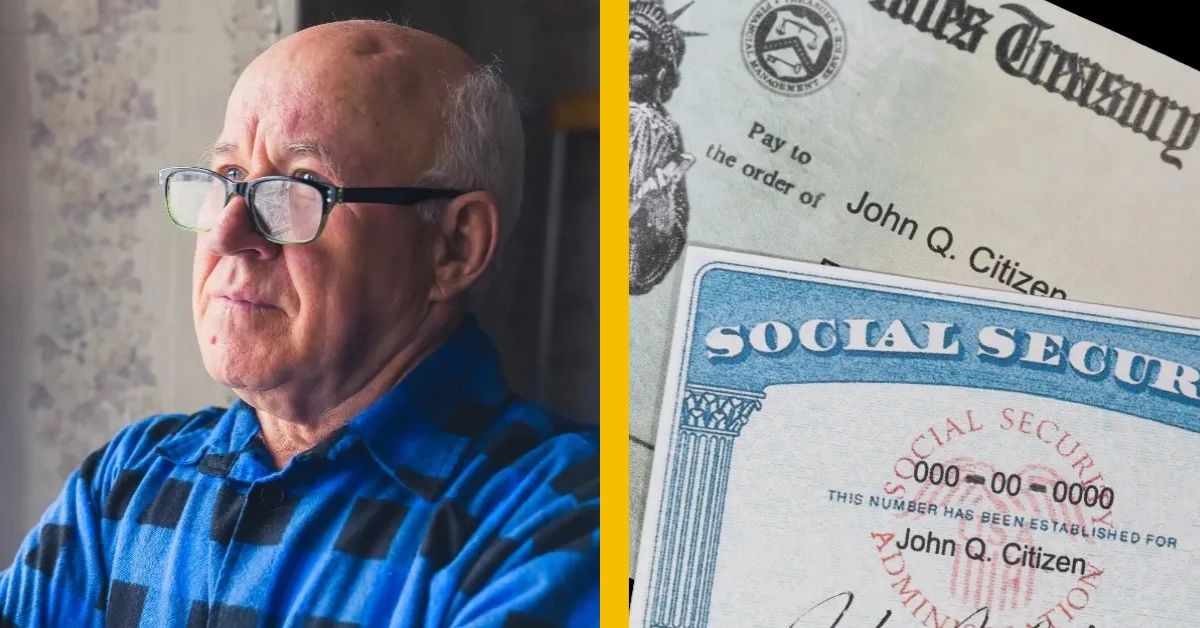
Injuries or illness can strike at any age, but if you've worked for years, you may expect the government to help you. That's where Social Security Disability Insurance (SSDI) comes in.
Want to find out if you qualify for SSDI and what goes into the application process before you retire and any health issues arise? Here are some signs that you could be approved for Social Security Disability benefits.
Now Available: The Definitive Guide to Retirement Income
Many successful investors eventually reach the same moment. The saving is done, the portfolio is built, and the question quietly changes from how much can I grow this to how much can I take out? Get that second question wrong and decades of good investing can come apart in a handful of years.
That is exactly what The Definitive Guide to Retirement Income helps answer.1 <p class="">Investing in securities involves a risk of loss. Past performance is never a guarantee of future returns. Investing in foreign stock markets involves additional risks, such as the risk of currency fluctuations. Guides are provided by Fisher Investments. The publisher may be compensated when readers request a guide.</p> It covers what your retirement could actually cost, which income sources are worth using, and the withdrawal math that decides whether the money lasts. It is free today from Fisher Investments. Read More Here ›
What is SSDI?
SSDI, often referred to as just "disability," is a type of payment made to qualified individuals by the Social Security Administration (SSA). This monthly payment can help provide for many of the needs of qualified individuals.
Since this type of financial aid is only available to those who have a disability that limits or even eliminates their ability to work, it's critical to understand if you meet the SSA's definition of disabled.
You cannot work
You may qualify for SSDI if you can't work. Under the SSA guidelines, this means you have some condition that limits you from earning enough money above "substantial gainful activity."
This figure differs from year to year. In 2025, if you can't earn more than $1,620 per month, you may qualify for SSDI.
You're legally blind
For those who are legally blind, as determined by an optometrist, you may also qualify for SSDI without any other medical limitations. The SSA considers you blind if your vision can't be corrected to better than 20/200 in your better eye or if your visual field is 20 degrees or less, even with a corrective lens.
If you are blind and cannot earn more than $2,700. per month, which is the threshold for substantial gainful activity for a blind person, then you may qualify.
Released: The Definitive Guide to Retirement Income (Sponsor)
Most people spend their entire working lives focusing on one thing: growing a pile of money. Then they retire and discover the skill they actually need is close to the opposite. Turning that pile into steady income, year after year, through good markets and bad, without ever running out. It may be the least discussed and most consequential transition in personal finance, and plenty of otherwise careful investors walk into it with no real plan.
That is exactly what The Definitive Guide to Retirement Income helps answer.1 <p class="">Investing in securities involves a risk of loss. Past performance is never a guarantee of future returns. Investing in foreign stock markets involves additional risks, such as the risk of currency fluctuations. Guides are provided by Fisher Investments. The publisher may be compensated when readers request a guide.</p> It is a free guide from Fisher Investments covering what your retirement will really cost, where the cash flow should come from, and how much you can safely withdraw each year. Learn More Here ›
You can support your disability claim
Here's the key to being eligible: You have to be able to prove it, and the SSA requires that proof include extensive medical documentation showing your disability and the degree to which it prevents you from earning an income.
To determine if you meet these requirements, you'll need to look at the SSA's Listing of Impairments for adults. You may qualify if you have medical documentation of one of these conditions and can show licensed medical doctor records.
You've worked enough years
You have to have enough work history and Social Security work credits to qualify. This is based on your total yearly wages or self-employment income, and according to the SSA, you can earn up to 4 credits each year.
Generally, to qualify for SSDI, you must have at least 40 work credits, and 20 must be earned in the last 10 years ending with the year your disability begins.
You paid into Social Security during your work history
If you worked but didn't pay into the Social Security system, you may not qualify for SSDI. Most people pay into SSA with every paycheck they earn, much like paying federal or state taxes.
If you worked an under-the-table job or your employer didn't report your earnings to SSA, you may have difficulty proving you meet the work eligibility requirements.
Your condition is expected to last for a year or longer
SSDI is provided on a long-term basis. If you're unable to work during a short period of illness, you may not be able to apply for SSDI.
Instead, if you can't work and the condition is expected to last for a year or longer or result in your death, you may qualify.
Your condition is severe
SSDI is meant for those with serious conditions that make it impossible for a person to work.
SSA defines severe as conditions where you can't do activities necessary for work for at least 12 consecutive months, such as walking, sitting, standing for long periods, or lifting. You may also qualify if you can't remember things due to a mental defect.
You meet the compassionate allowance requirements
There's typically a waiting period to determine if your condition will improve. However, if you meet any of the SSA's compassionate allowances, you can apply for and get SSDI immediately.
Compassionate allowances are for those who have particular conditions like pancreatic cancer, Lou Gehrig's disease (ALS), or acute leukemia.
Get instant access to hundreds of discounts
Over 50? Join AARP today— because if you’re not a member you could be missing out on huge perks like discounts on travel, dining, and even prescriptions.
Get 25% off membership — just $15 for your first year with auto-renewal — and a free gift if you join today.
You can't do other types of work
Disability often focuses on a person's ability to do the job they've been doing in the past. However, if you can't do any work due to your medical condition, that could indicate you're eligible.
If you have transferable skills that could be used in another industry that would be possible to manage your medical impairment, you may not qualify for SSDI.
You see a specialist routinely
If you are unsure if you meet the requirements for obtaining SSDI, consider the type of doctors you visit.
If you see a specialist consistently, such as for multiple sclerosis, heart disease, Parkinson's disease, or Huntington's disease, you likely qualify for SSDI if your condition is debilitating.
Bottom line
If you meet these criteria, applying for SSDI is straightforward. You can start the process online or visit your local SSA office.
Even if you don't qualify, the SSA can help you explore other programs, such as Supplemental Security Income, to help you have a stress-free retirement.
More from FinanceBuzz:
- Retire like the rich: 14 ways you could build wealth in your 50s.
- Find out if you could pay less for car insurance in just a few clicks.
- Make these 7 savvy moves when you have $1,000 in the bank.
- 14 moves seniors could benefit from but often forget about.
- Huge discounts on travel, groceries, prescriptions and more
- Access to financial planning resources and health tools
- Join AARP and get 25% off with automatic renewal
Subscribe Today
Unlock the Best Banking Deals and Bonuses
From high-yield savings accounts to cashback checking and sign-up bonuses, we bring you the best banking offers to grow your money smarter.
Add Us On Google